Beyond Digital Transformation
Reshaping Institutions, States, Power, Work, and Judgment in the Age of AI
How does an institution change when producing knowledge becomes cheaper while verification costs and decision responsibility remain?
A framework for redesigning tasks, decision rights, and sovereign capacity around the new scarcity: assured judgment and accountability.
An invitation to readAn invitation to read
The book begins where tool-centered narratives end. Digital transformation moved transactions from paper into systems while largely preserving a human role for context and judgment. Models now enter that domain by producing analysis, drafts, and alternatives, but they do not thereby become legally or institutionally responsible for decisions built on their output.
Every abundance relocates scarcity. As cognitive output becomes cheaper, verification, context, judgment, and accountability become more valuable. The book distinguishes plausible cognition—an output convincing enough to begin review—from assured cognition whose sources and limits are known and which an accountable authority has accepted. The distance between them is institutional work, not a model feature.
The analysis then moves through task bundles and decision rights, the productivity puzzle, and the formation of expertise when entry-level work disappears. It turns to the state as purchaser and capacity builder, returning geography to AI through chips, energy, networks, and language. The question is not simply which model to buy, but what an institution must retain the capacity to verify, build, and govern.
Anatomy of the argument
An analytical reading of the supplied brief. These stages are not manuscript chapter titles.
- 01
The new cognition economy
Identify what models make abundant and where scarcity moves: context, verification, judgment, and accountability.
- 02
Redesigning the institution
Recompose work around tasks and decision rights rather than counting deployed tools or assistants.
- 03
Building expertise after automation
Weigh today’s gains against tomorrow’s capacity to form professionals who can review machines and handle difficult cases.
- 04
State, geography, and capability
Separate safely rentable capacity from institutional memory and judgment, and connect AI to physical and linguistic resources.
- 05
Accountable wagers
Attach indicators and disconfirmation conditions to forecasts so readers can revisit the thesis as evidence changes.
Concept laboratory
Plausible and assured cognition
A convincing output can begin review; adoption requires source, context, verification, and an accountable owner.
The institutional cognition stack
Data, context, model, verification, judgment, decision, action, accountability, and learning remain linked even when one layer gets cheaper.
Verification and liability matrix
An illustrative model sets ease of checking against consequence of error to choose an appropriate level of control.
Illustrative model · invented inputs, not evidence or a prediction.Expertise debt
Automating junior work can conceal a delayed loss in the institution’s capacity to produce experts.
A thought you can test
Illustrative model · invented inputs, not evidence or a prediction.
From plausible answer to authorized action
These gates illustrate responsibilities. Passing them in a diagram cannot guarantee that a real decision is correct.
- Context — Define the decision and the situation it addresses.
- Verification — Examine evidence, uncertainty and limits.
- Authority — Identify who may authorize the action.
- Accountability — Record ownership, consequences and a review path.
Visual library
Original conceptual studies. Covers are proposals; captions are editorial writing, not manuscript quotations.
Beyond Digital Transformation
How does an institution change when producing knowledge becomes cheaper while verification costs and decision responsibility remain?
Download SVG study ↓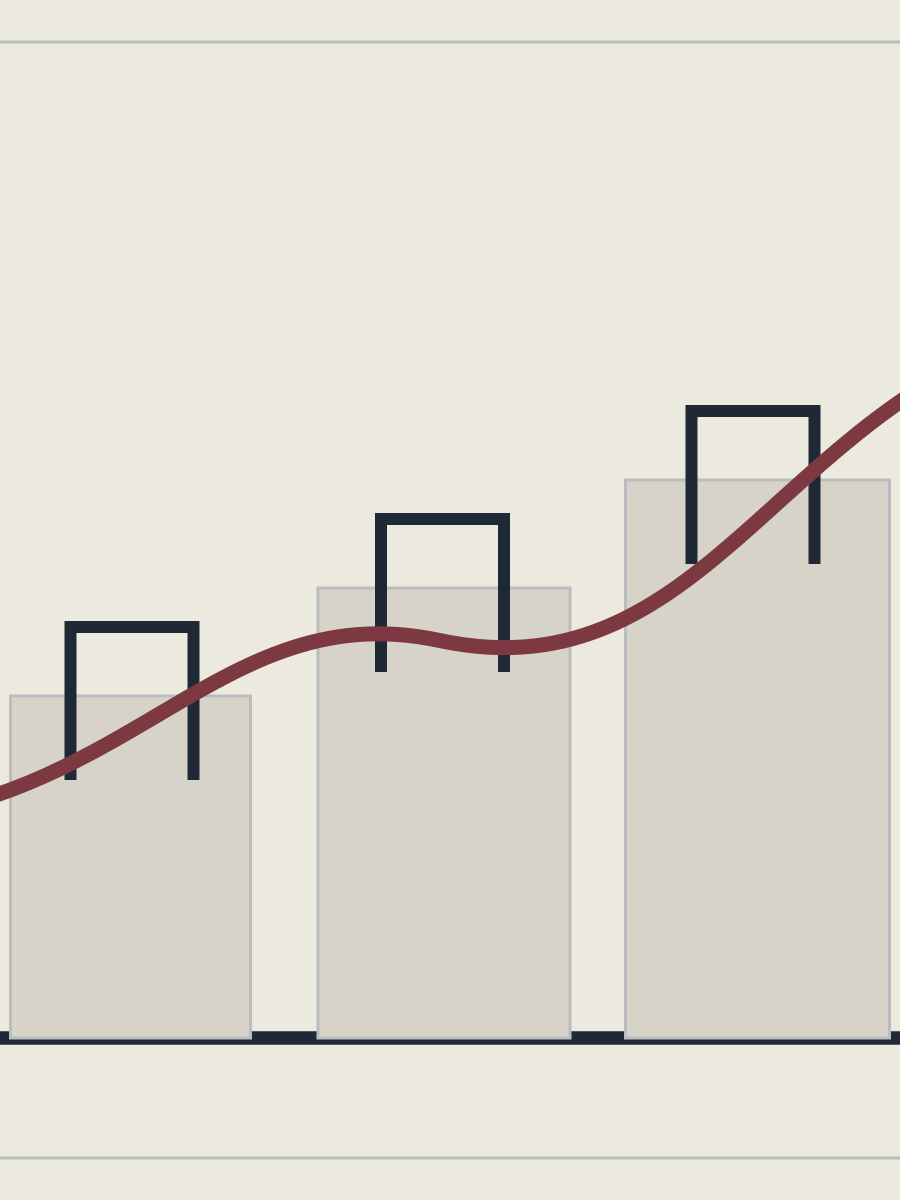
A framework for redesigning tasks, decision rights, and sovereign capacity around the new scarcity: assured judgment and accountability.
Download SVG study · 2:1 ↓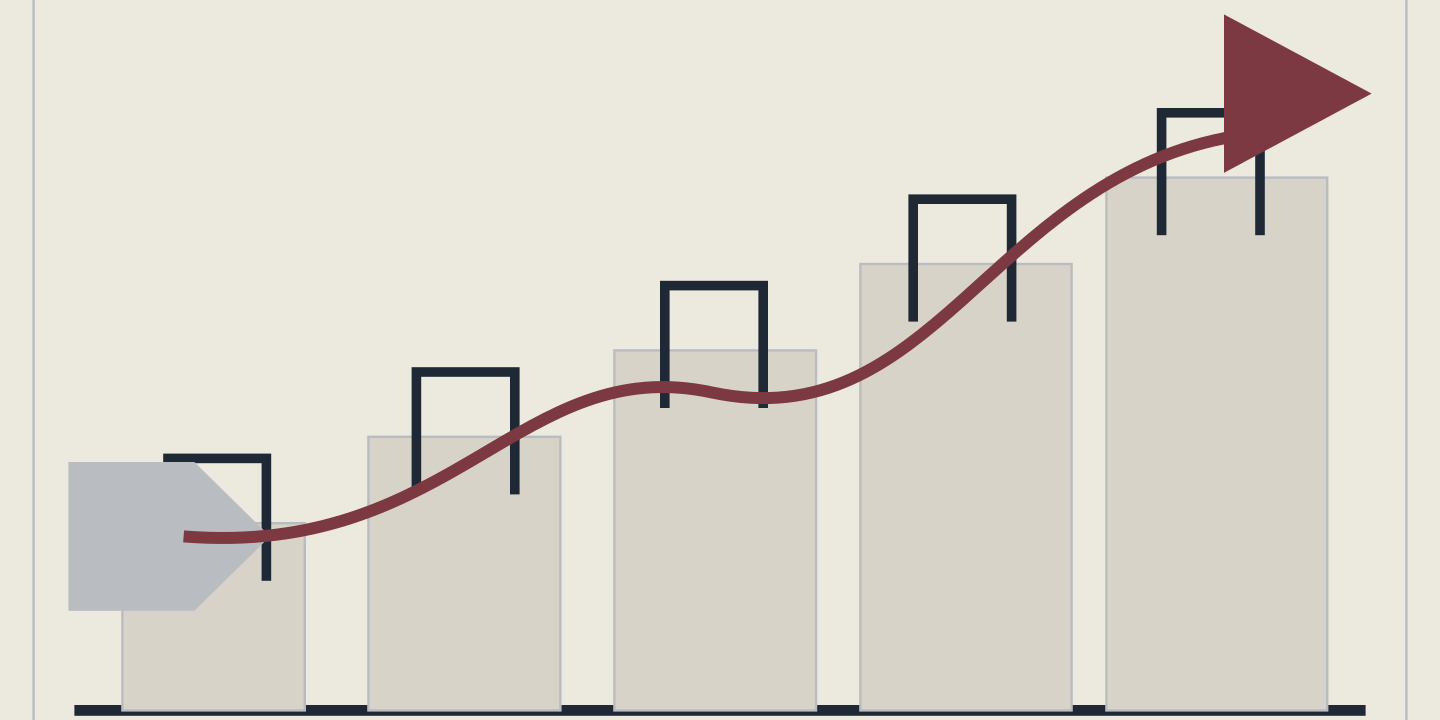
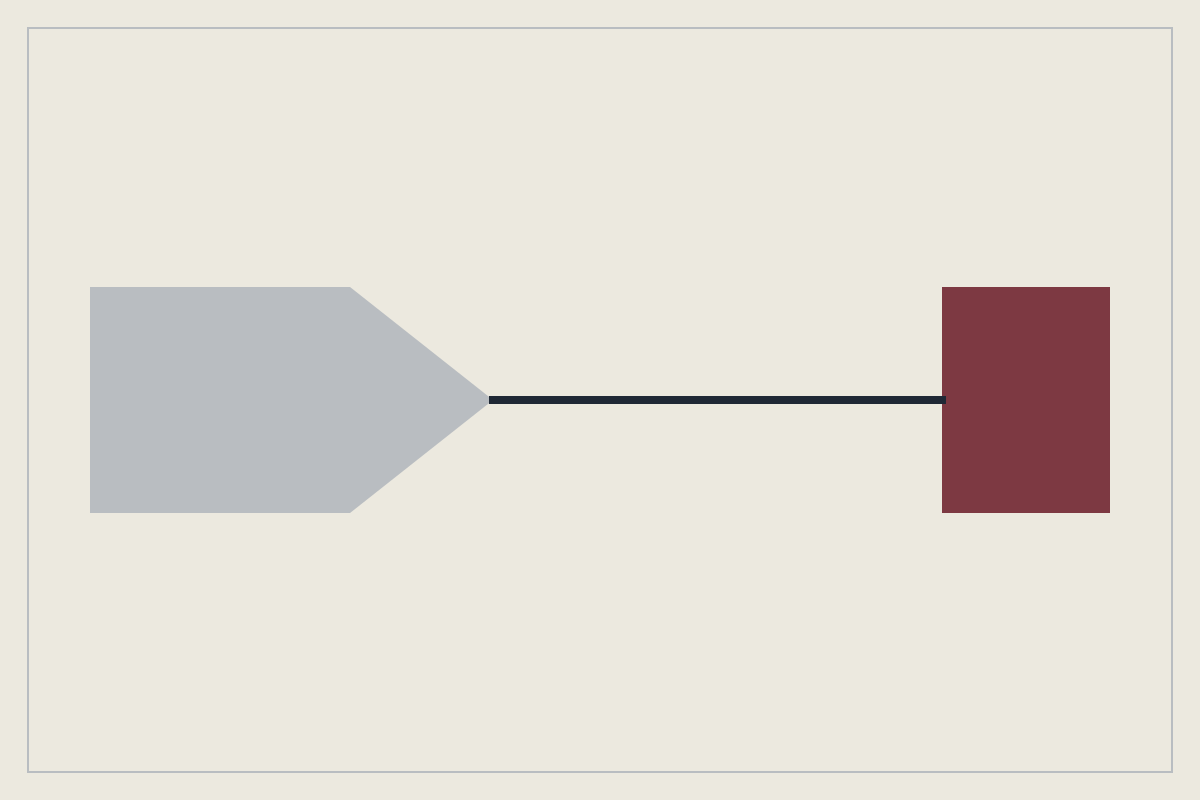
A plausible answer is a starting point
An output may look coherent and persuasive without carrying the conditions for institutional use. The study presents the answer as material for review before it becomes a basis for action.
Download SVG study ↓
The context gate
Before an answer is judged, the decision it will serve and the setting in which it will operate must be defined. What suits a low-consequence task may not suit a consequential decision.
Download SVG study ↓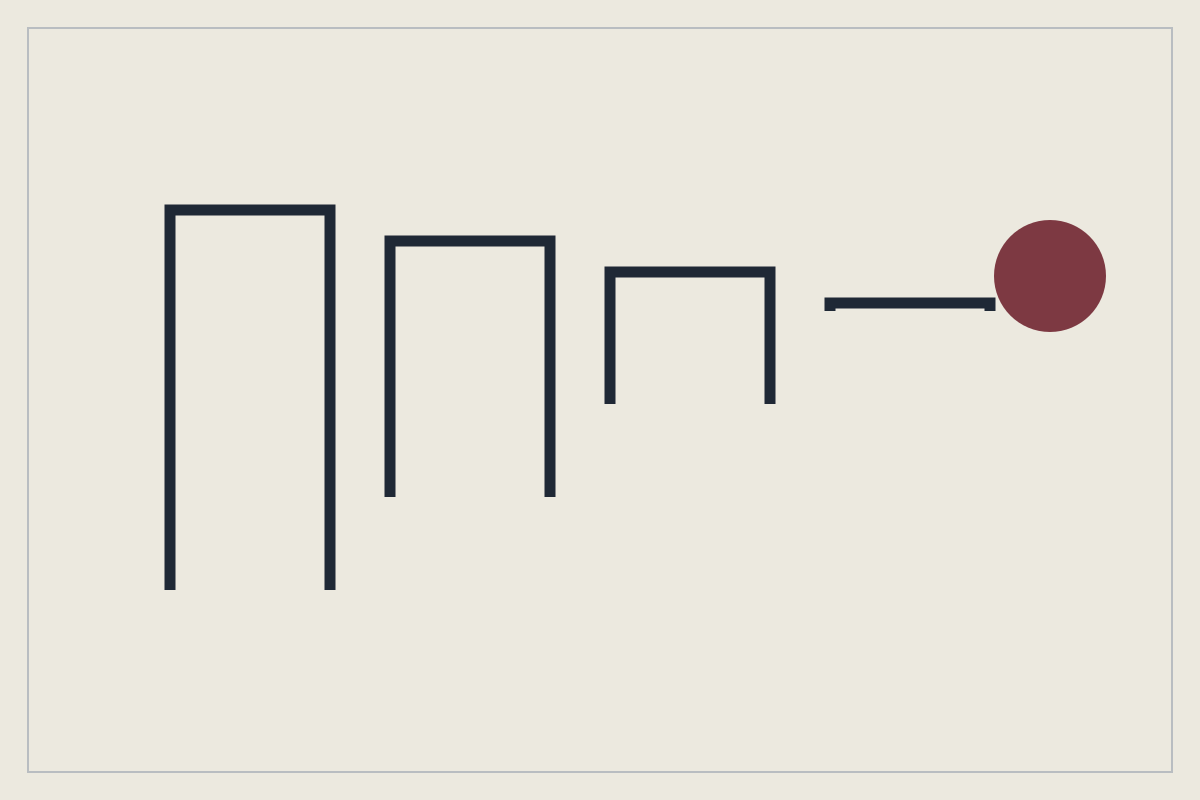
The verification gate
The output is examined for evidence, assumptions, limits, and uncertainty. This gate does not add absolute certainty; it makes the warranted level of confidence inspectable.
Download SVG study ↓
The authority gate
An answer can be useful while the question of who may adopt it remains open. The gate separates producing knowledge from holding the authority to act on it.
Download SVG study ↓
The passage into action
Execution needs clear limits of delegation and a way to stop or review effects. The capacity to act does not release an institution from assigning responsibility before action begins.
Download SVG study ↓
The accountability and reversal loop
After action, the result returns to a record that can be examined and learned from, with a reversal path where one is possible. The loop cannot guarantee correctness; it keeps the decision from disappearing after execution.
Download SVG study ↓Six small arguments
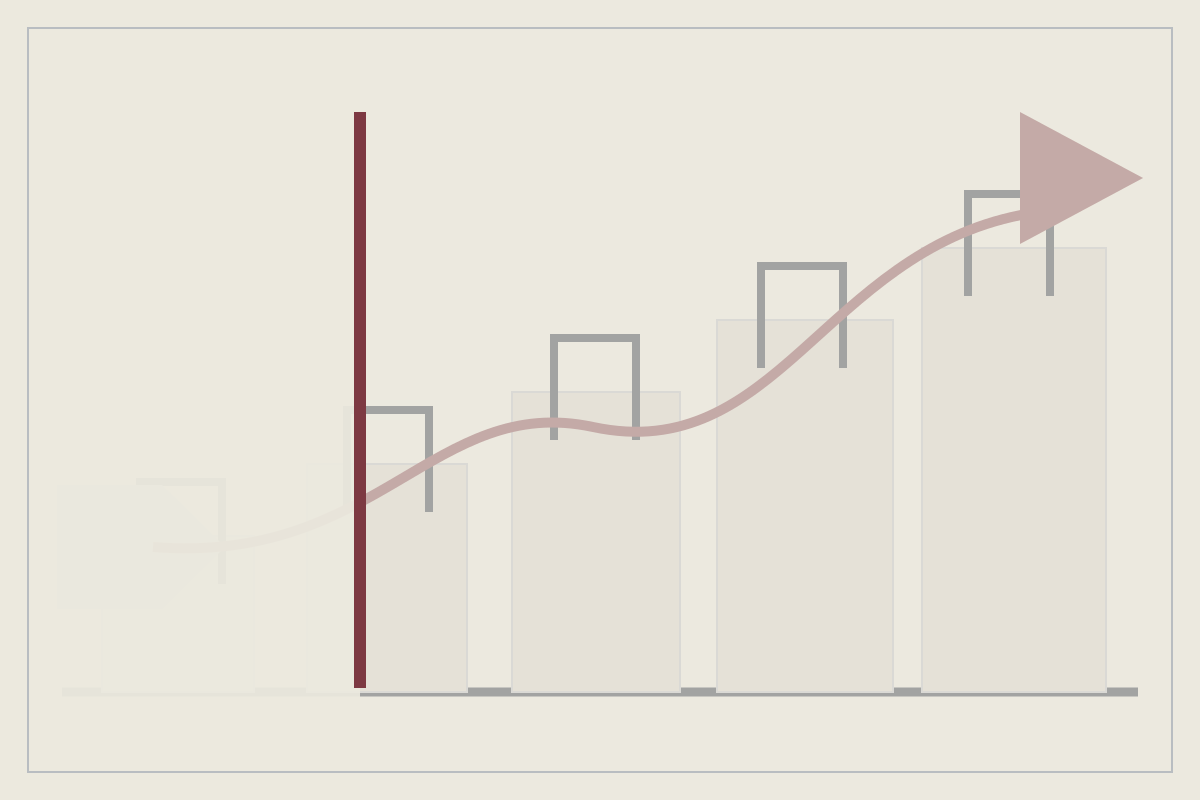
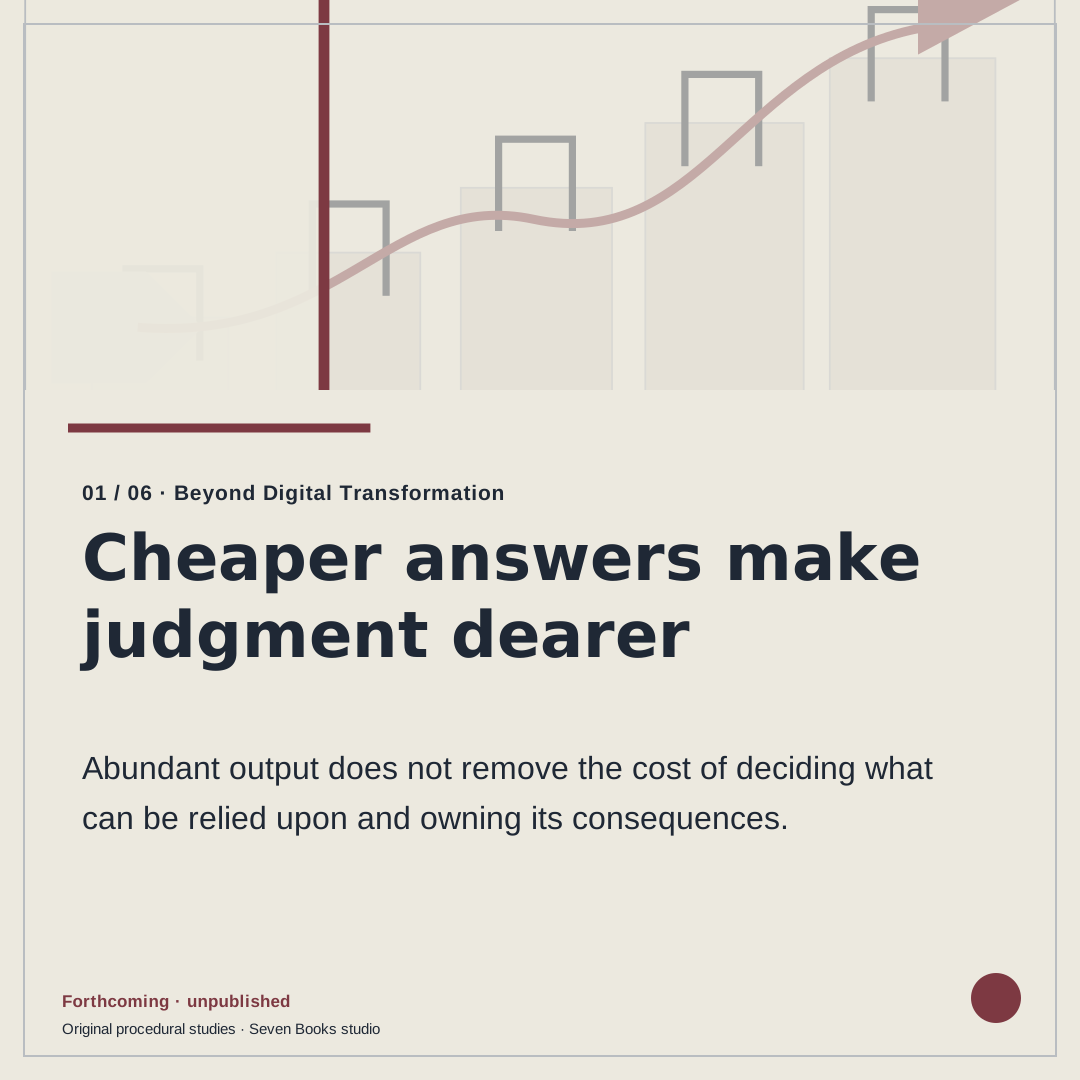
Cheaper answers make judgment dearer
Abundant output does not remove the cost of deciding what can be relied upon and owning its consequences.
Download SVG study ↓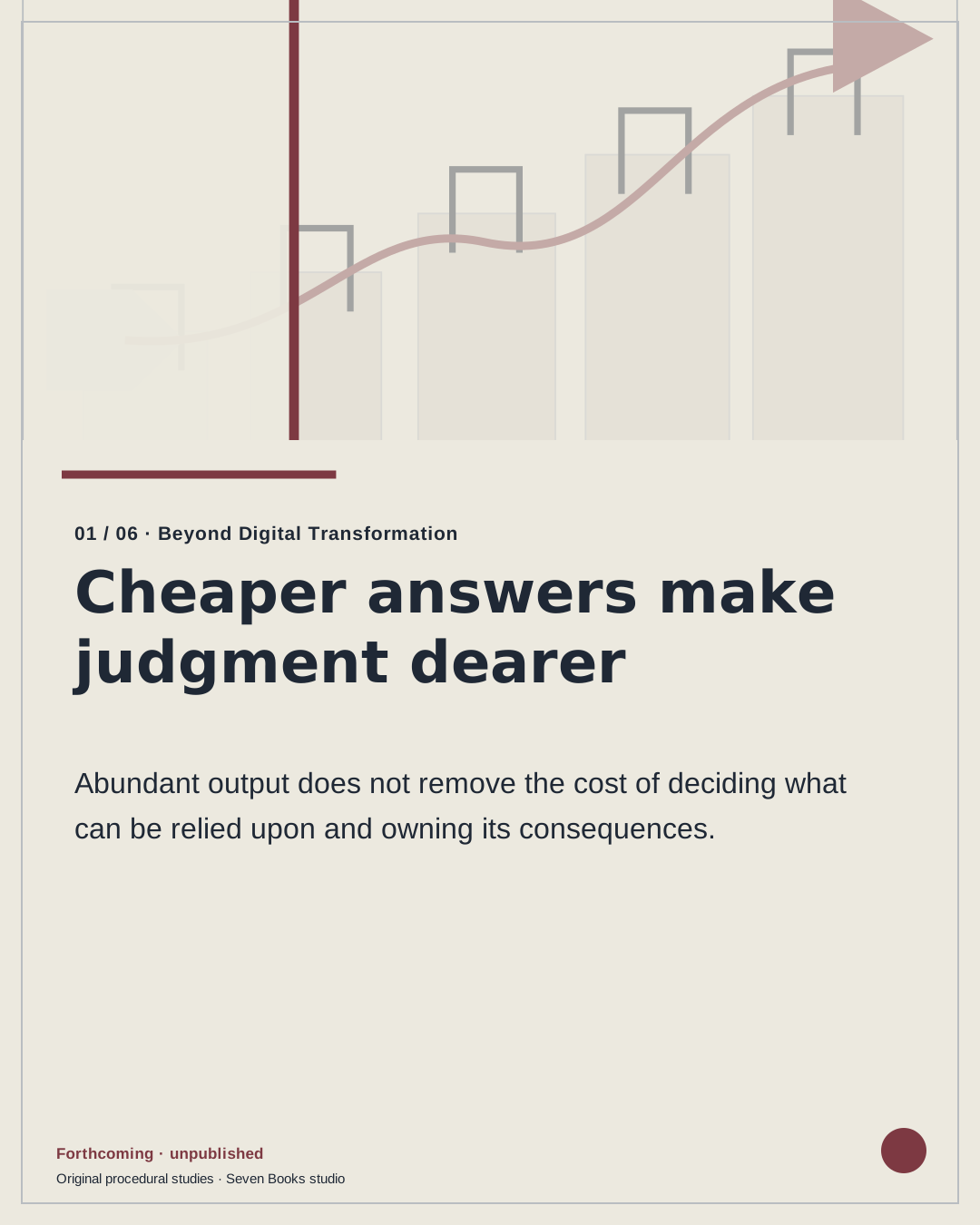

Where will tomorrow’s expert come from?
If machines perform most tasks through which juniors learn, who will later be able to review them?
Download SVG study ↓
Model capability and institutional capability
Task performance does not prove that procedures, authority, and verification can turn it into value.
Download SVG study ↓
Procurement as industrial policy
State technology purchasing determines where expertise and dependency accumulate; it is an industrial choice, not a price transaction alone.
Download SVG study ↓
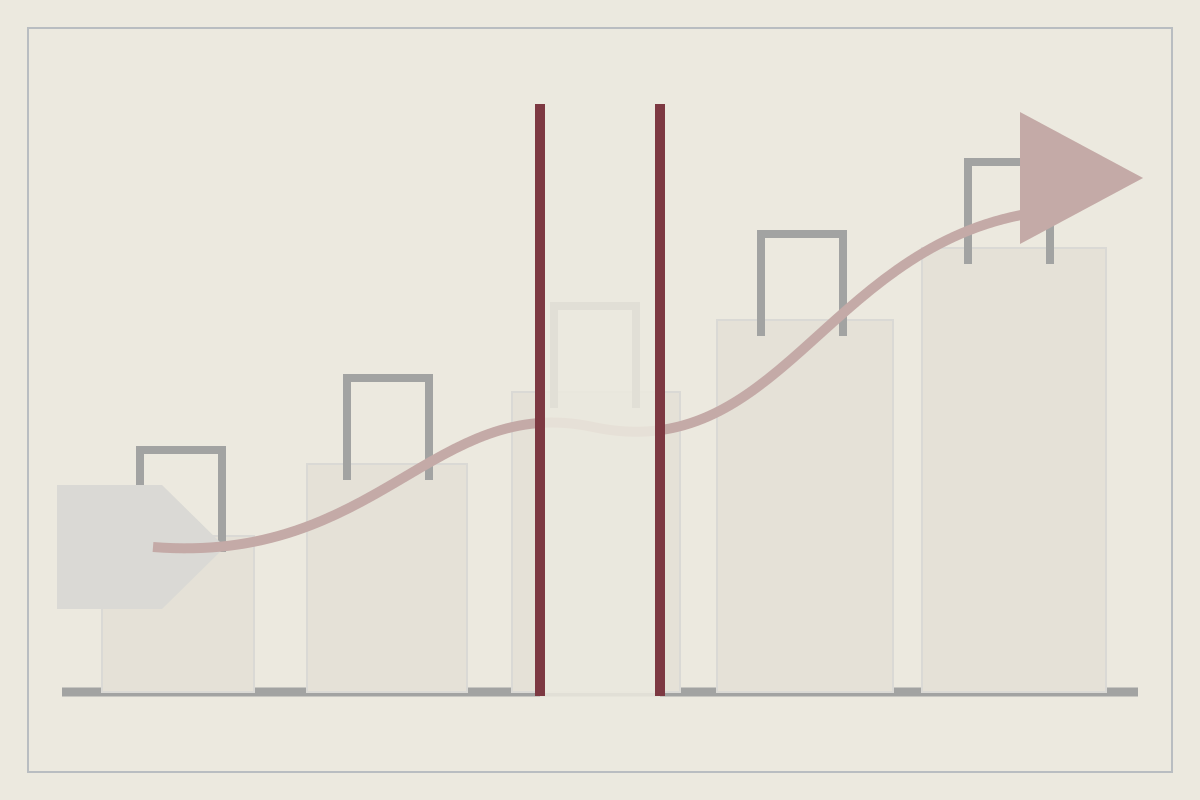
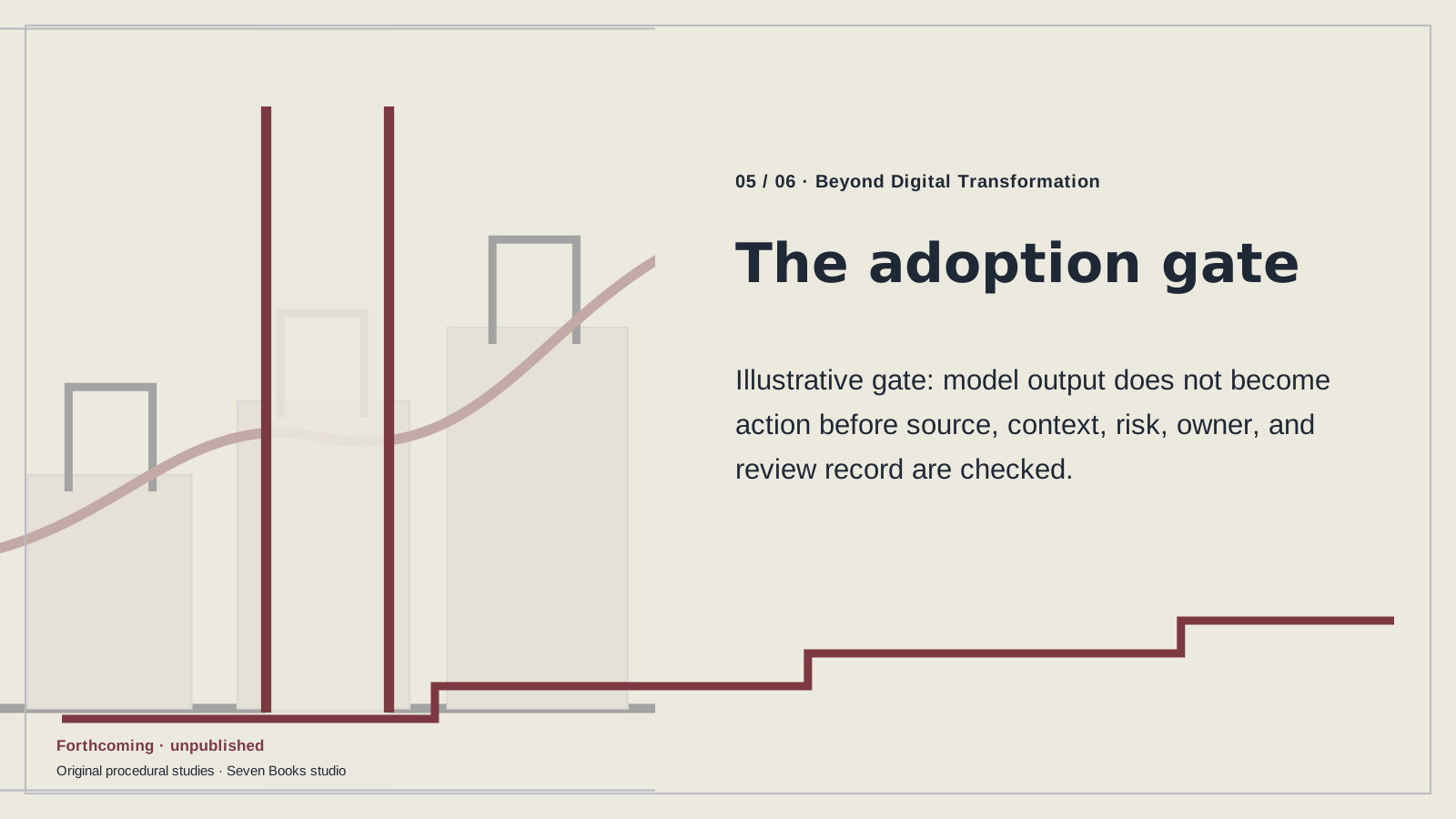
The adoption gate
Illustrative gate: model output does not become action before source, context, risk, owner, and review record are checked.
Download SVG study ↓
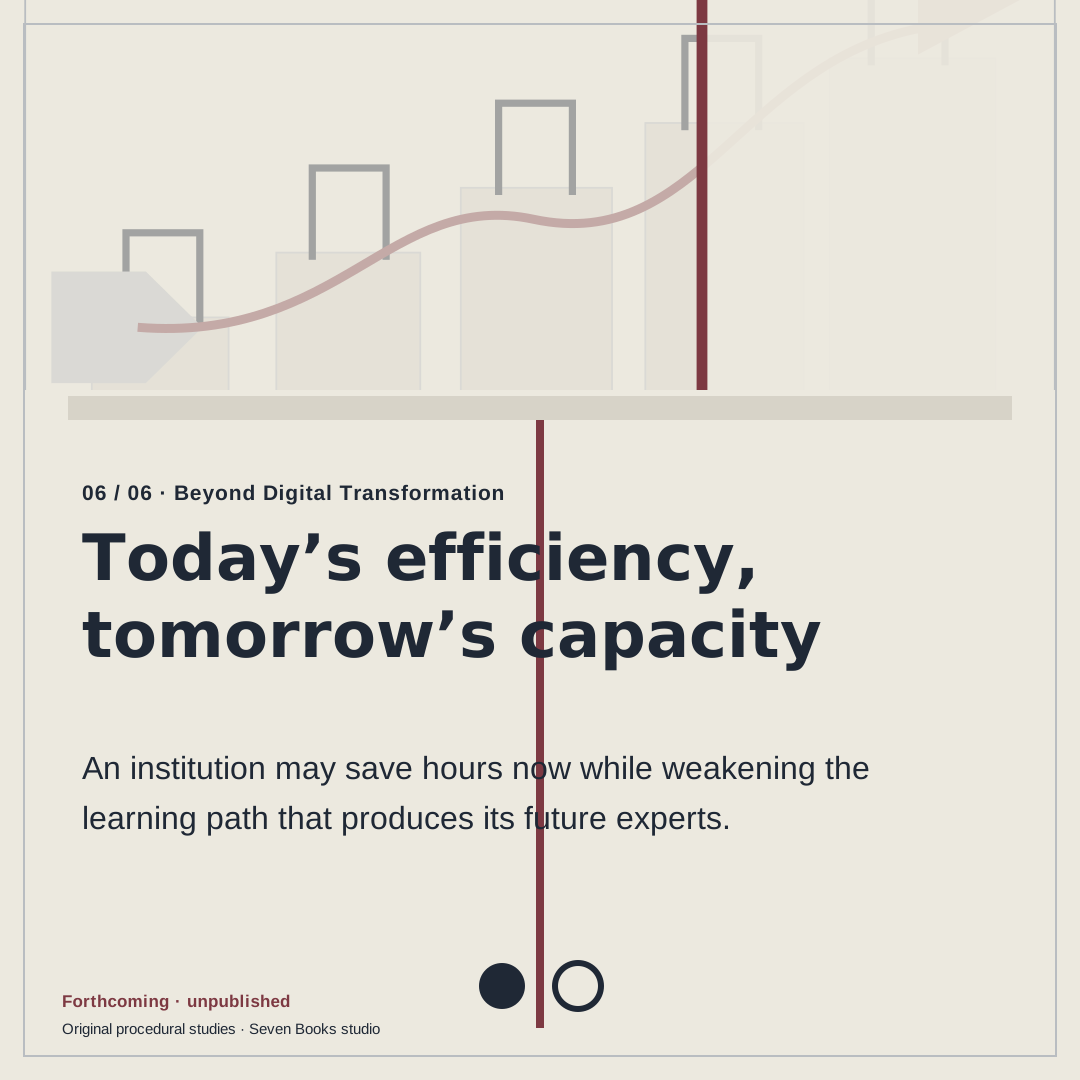
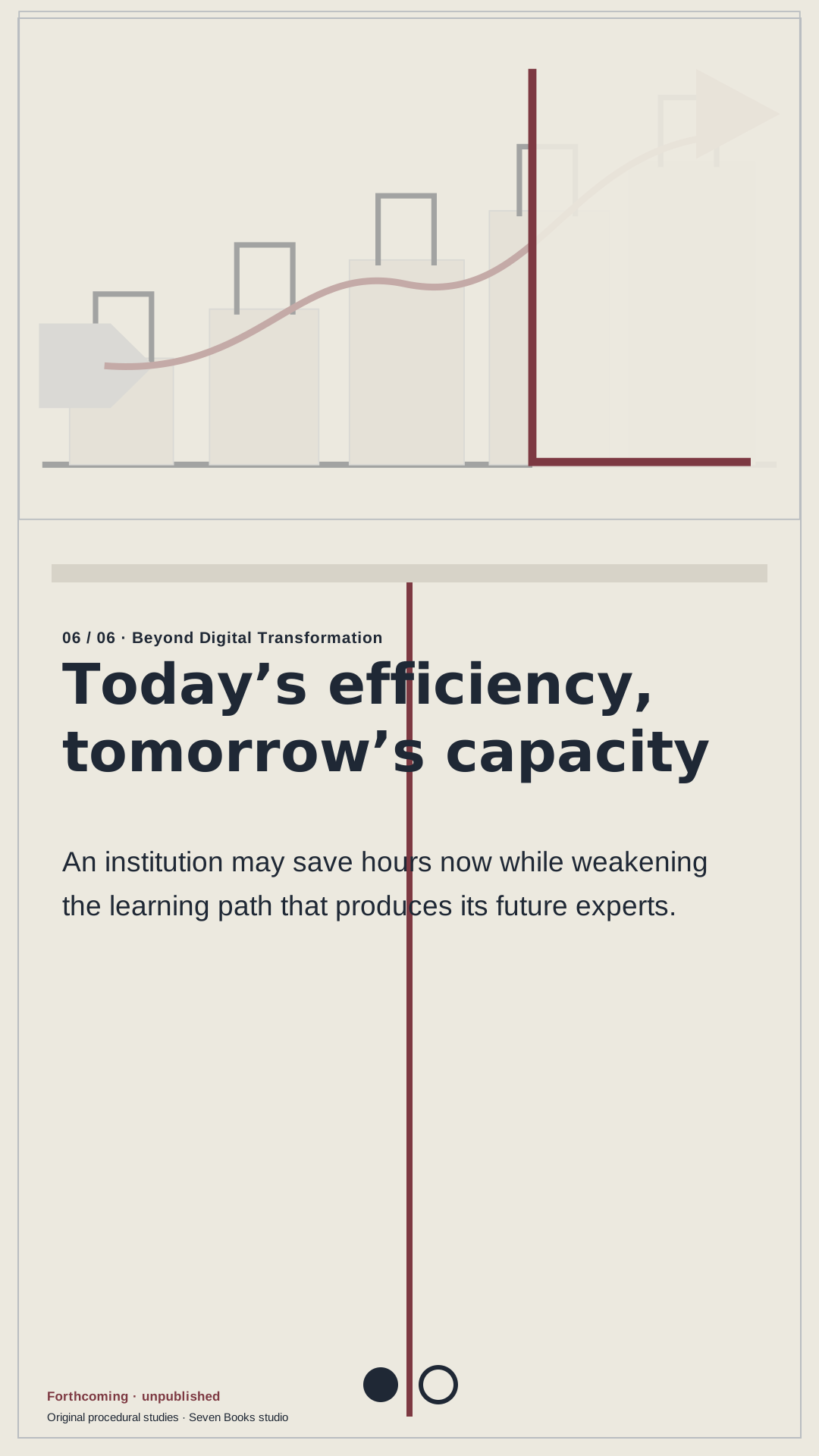
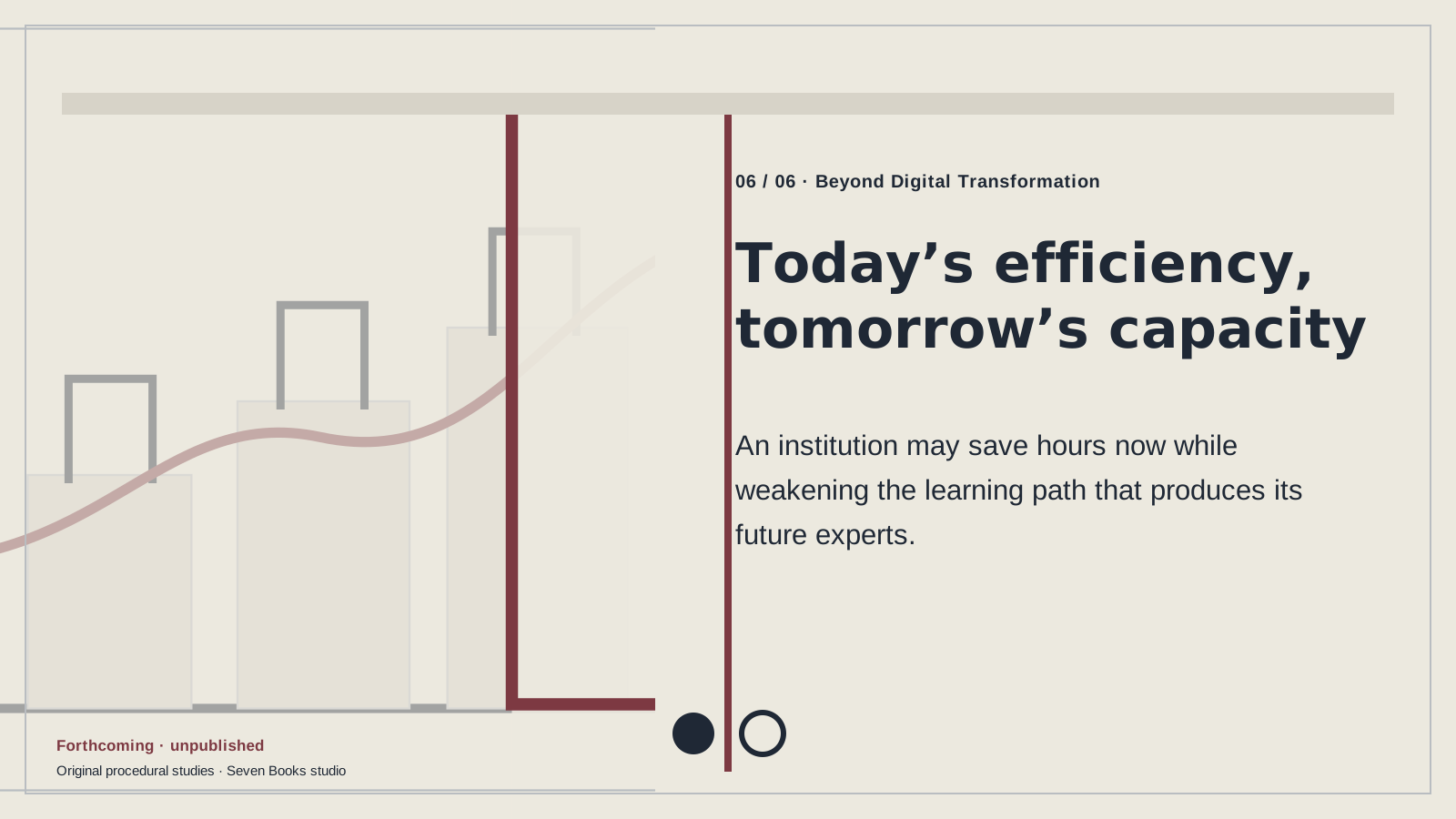
Today’s efficiency, tomorrow’s capacity
An institution may save hours now while weakening the learning path that produces its future experts.
Download SVG study ↓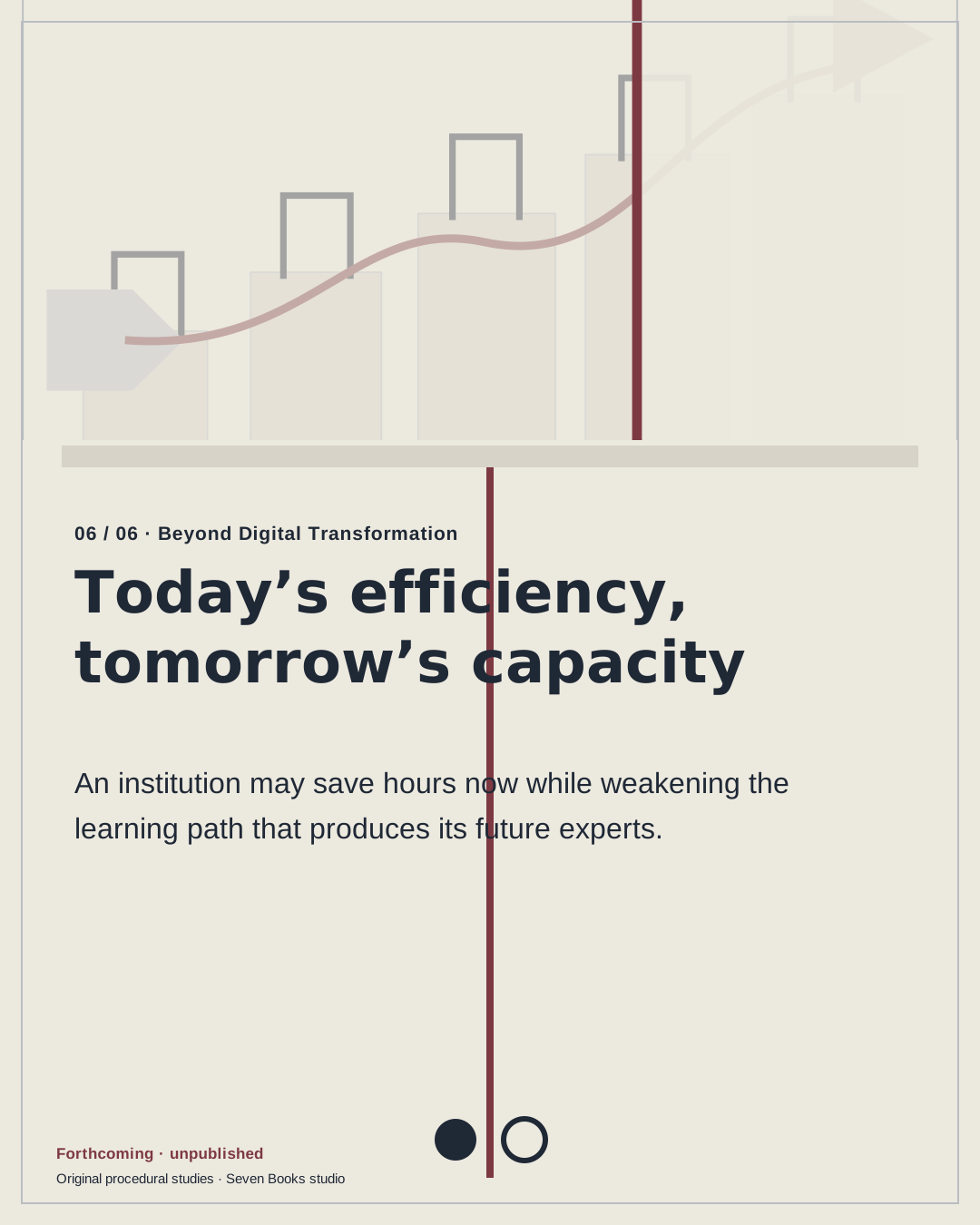
Original procedural studies · Seven Books studio · Project-original procedural geometry
Continue the question
Beyond the Breach
How can a state or institution remain secure when breaches cannot be ruled out and machines accelerate action while responsibility remains human?
05Hinges of Power
Does power lie in owning a resource, or in moving, stopping, and restoring it while a decision still matters?
06What We Do Not Say
How can we understand people when speech does not equal action, behavior does not reveal motive, and some people never enter the measurement?
07The Compass of Reality
How can a decision maker distinguish the reality they need to understand from the picture their measurement tools permit them to see?
JournalAsk a Better Question Before You Adopt AI
AI becomes useful when an institution defines the decision, the limits, and the responsibility before choosing the tool.
When the work becomes available
Choose the books you want to hear about. A confirmation email verifies your address before any release notice is sent.
Publication notifications are not open yet. No address is collected here.
Privacy and consent ↗