Ideas
Ideas

The Borrowed Intelligence Economy
Why AI wrappers are not deep technology, how original technical knowledge creates durable value, and what Saudi Arabia should build by 2030.

The Words That Are Not on the Internet
A proposal for a National Saudi Diwan of Human Knowledge built on authentic human data, consent, provenance, education, and public participation.

Everything Works. What, Then, Do We Know?
The digital prosperity paradox in Saudi Arabia and the Gulf: what cloud outages reveal about shared dependencies and service continuity—and what success indicators cannot prove.

The Computer That Cuts Its Own Wage
What happens when inference prices fall faster than long-lived computing assets can recover their capital? An essay on software efficiency, paid demand, capacity and the commercial life of AI hardware.

The Bee That Stopped the Dance
How swarm intelligence, small specialized models, model routing, and local inference may reshape artificial intelligence systems.

When the Lights Rise and the Economy Disappears from View
Can satellites read the Saudi economy before its statistics arrive? An essay on nighttime radiance, GDP, data vintages, cultural calendars and the limits of economic inference from orbit.

When Dammam Became a Factory for Seconds
How Groq’s LPU architecture, Saudi inference operations, cooling physics and deadline-aware scheduling could turn compute into measurable useful time.

Who Buys the Failure Before It Happens?
Can Saudi Arabia turn documented technology failures into portable, inspectable tests that foreign buyers will pay to run again?

The Engineering That Outlives Its Makers
What makes a technical system reconstructible after its original supplier and build environment disappear? An essay on evidence, source rights and technical succession.
When a State Needed an Embassy Without an Ambassador
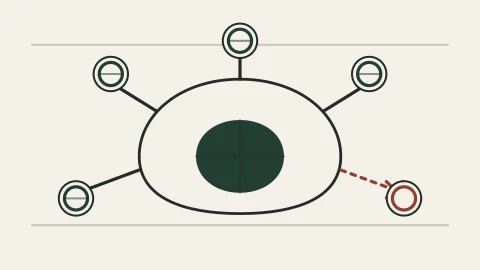
From a fire at the Public Prosecution office in Dammam to Kyiv and Svalbard: why backups alone cannot protect institutional memory, and how Saudi Arabia might evaluate data embassies as part of a wider architecture for sovereign continuity.

Who Holds the “Yes” When the Center Falls Silent?
How can public services preserve bounded local decision authority during a network failure without pretending that a local copy has the centre’s truth?
When Claude Entered the Missile Room
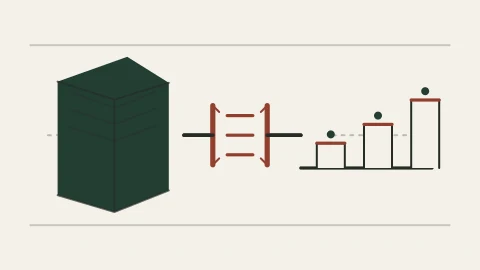
From Shamoon to the Red Sea: a Saudi reading of what changes when some software expertise becomes a cloud service, and of the distance between help with code and a demonstrated military capability.
Ask a Better Question Before You Adopt AI
AI becomes useful when an institution defines the decision, the limits, and the responsibility before choosing the tool.
Data Frames the Decision; It Does Not Make It
Measurements can improve attention while leaving context, values, and responsibility for a decision unresolved.
Security Is a Design Decision
Security becomes credible when access, friction, recovery, and accountability are designed around the harm at stake.